You Need a Critic


This started as a panegyric on Andy Warhol. Somewhere it ran off the rails.
Because I started thinking (thinking is my Kryptonite, dammit), "Why do I need to convince anyone that Andy Warhol was a great artist? Either you like him or you don't. Period."
My father was a no-nonsense kind of guy, and by no-nonsense I mean, he had no tolerance for time-wasting. Here's what he would have said about Andy Warhol:
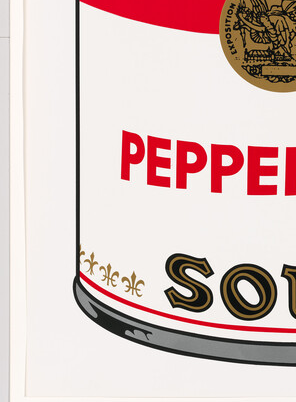
- Anyone can paint a Soup Can.
- You just like him because everyone else in your little circle likes him.
- I don't like him now, and I can't see myself liking him in the future.
These are valid points.
- If anyone can paint a Soup Can, the world will be flooded with Soup Can paintings, making it your impossible job to determine what Soup Can paintings are worth your time and which are not.
- Hipness is notoriously fickle. The group will move on to the post-Soup Can Painting era. Oh ... and then your group will mock you for still having a Soup Can painting on your wall. Thanks guys.
- Liking a Soup Can Painting may be a good thing is the precursor to many things: understanding, fitting into your world view, even changing the way you look at other cans - like Baked Beans and whatnot. But disliking something? What benefits are there in that? (Other than giving you something to make fun of.)
These objections depend on one axiom - time wastage is bad.
Hard to argue with that. And it's no good pretending to like something you don't. That is major time wastage. And it's time you could've spent on more worthy pursuits, like playing Final Fantasy XII or listening to K-Pop or something.
I get that. I'm an old Gen-X Geezer. I sure as hell don't have time to pretend I like something when I don't. And for the first 50 or so years of my life, I didn't like Andy Warhol. I didn't hate him, but I didn't think he was worth my time.
Yet, I have grown to like Andy Warhol.
Wait. Not grown. That's too "holier-than-thou" a word.
More like "changed" ... changed in a way that I like. Changed in a way that I'm passionate about. Changed in a way that I'm going to try to inflict on you, if you are not there already.
I mean ... what else is a critic supposed to do?
If We Don't Need Andy Warhol, We Don't Need a Critic Going to Bat For Him Either
Except you do.
It's easy to dismiss critics. They seem to be bottom feeders that don't create anything themselves, then hold their opinions in high esteem. If you believe that, you should really read Pauline Kael, who to me was the quintessential entertaining critic, whose pieces are worth reading whether you see the reviewed movie or not. Now I'm being a critic's critic - how meta.
But you dismiss critics at your own peril because the world of "liking" is not always solid.
Sometimes it really, really feels solid. It's the wishful thinking that comes with passion, an almost spiritual thing that acts in physical ways. It's the goosebumps on the flesh, the sigh that escapes your lungs. Disliking is just as physical. You bristle, you cover your ears, you turn away out of necessity. That's pretty real.
Sometimes you are faced with something you neither like nor dislike. Something about it might be vaguely intriguing. Something might be vaguely repulsive. Or maybe the whole thing is just downright confusing. Sometimes you look at a painting, dismiss it out of hand, then find yourself looking at it again because something latched itself into your brain.
That's why you need a critic ... to convince you that you should like it or dislike it.
No, that's too simple. No one ever liked a piece just because a critic told them to. (Or maybe they did, but they're just plain stupid.). In the end, the subject must do the hard work of examining the piece.
The best a critic can do is say "If you invest the time and effort, you have a good chance of liking this. I did."
That is something my father might agree is a valuable service. It keeps you from wasting time on things that are unlikely to have a profound effect on you.
It's like science. Science, at its core, is not the pursuit of facts - it's in the business of prediction. A skeptic might say, "You can't drop every ball ever made from the Leaning Tower of Pisa. One ball might not actually follow the law of gravity." True dat. But if it fits every ball that's ever dropped so far, as far as we know. You can be not positive, but sure enough that the next one you drop will follow the same path. The Law of Gravity may or may not be perfect. But it has predicted everything correctly so far, and is therefore good enough for our purposes.
As much as one might long for "absolute truth", the good news is you don't really need the absolute truth to be loved, fed, clothed, and happy.
Criticism is the business of predicting whether something is worth your time. Yeah, it's more swampy than science. There are critics I don't trust, but unlike science I have no objective framework like the Scientific Method I can apply to them. I have only their predictive power. This one critic told me to like these 10 things and I liked 8 of them, and that's good enough. If another critic bats 9 out of 10, I will gladly dump the first critic for the second.
Think about a piece of art or music that made you disliked at first, but that you now like. It might be difficult because passion has a way of rewriting history. "Oh I liked that all along," you might say. But if you think hard enough, you will come up with something that grew on you like fungus.
In my life, that was the song Sister Ray by the Velvet Underground. Lo and Behold, it has a Warhol connection!
Sister Ray
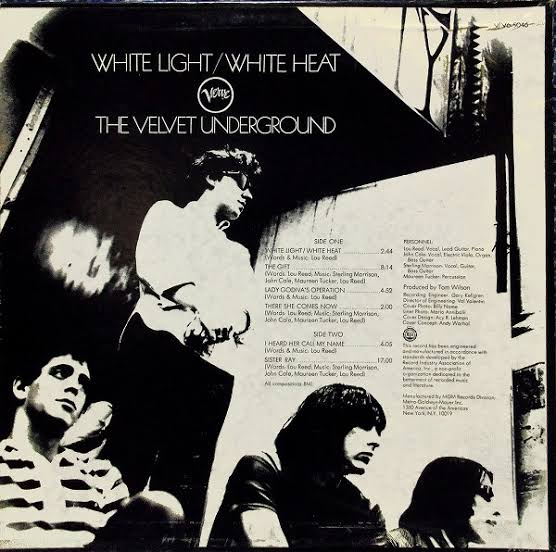
For me, and for a lot of self-proclaimed Rock Snobs, The Velvet Underground and Andy Warhol are inseparable.
While it's true Andy Warhol never played guitar or wrote songs, he did have a big role in breaking the Velvet Underground. He supposedly produced their debut album, "The Velvet Underground and Nico", although if you believe Lou Reed, he didn't do much producing at all. But Warhol's legitimacy and the New York Scenes' love of him, ... he had the power to take a pretty un-mainstream, noisy, and confusing rock band and get them a record deal.
Which brings us to The Andy Warhol Museum, located in Pittsburgh. It is 6 floors of weirdness - the largest museum dedicated to a single artist in all of America. I'll say more about the Pittsburgh connection in a minute because it's dreadfully important in understanding Warhol (if that's even possible).
Anyway, the museum is a visual assault, and I mean that in a nice way. Of all the rooms, the most visually assaultive was the Exploding Plastic Inevitable Room, walled off by a black curtain. The Exploding Plastic Inevitable was a show performed in New York City around 1966, where Warhol would show homemade black and white movies - a bunch all at once - on the walls of a theater while a then-unknown band named the Velvet Underground played loud, atonal, screaming guitars and (yikes) electric violin.
A particular detail in the Exploding Plastic Inevitable Room which is not historically accurate, but makes a whole lot of sense anyway, is the playing of post-1966 Velvet Underground songs including a 30-minute live version of "Sister Ray." That room was on Floor 4 and I could hear it from Floor 5. It was like a siren song.
OK, let's talk about Sister Ray.
Many people have heard this song once. Some have listened it to more than once. But no one ... and I mean no one ... has made it the whole way through on first listen.
The album version is 17 minutes long. It is merciless. It's the song where John Cale famously plugged his electric organ directly into the mixing console for maximum carnage. If you have ever seen a VU meter, and watched its little needle dance back and forth with the dynamics of the music ... Sister Ray pegs the needles fully in the red zone the entire 17 minutes.
While it blasts your eardrums, you think "God, this song is going to go on forever."
Is it like Revolution 9 by The Beatles? Kind of. The difference is ... no one wants to listen to Revolution 9 a second time. In the words of my brother Jon, "Revolution 9 is the reason a CD Player has a Skip button." (I think that was a widespread critic's joke, but ChatGPT can't find the reference, so I'll attribute it to him).
Sister Ray, on the other hand, has a few intriguing virtues, even, on first listen. It has an incredibly infectious and brilliant hook. The lyrics like "She's busy sucking on my ding-dong." make you raise your eyebrows a little. It's abrasive, sure, but it's also kind of funny. I dunno ... maybe it's worth another listen.
Welp. There's a time in every rock snob's life when they stop saying, "Sister Ray is going to go on forever," and they start saying, "I wish Sister Ray could go on forever."
I remember when I hit that moment. It was around 1995. It took a few years. I didn't listen to Sister Ray every day, of course, but one magical day, I was just ready for it. I embraced Sister Ray. And I have never looked back, although there are flashes of "why am I doing this to myself?" around minute 13:00. But those moments fade pretty quickly.
Would I have hung on were it not for a rock snob telling me every five minutes that I should like this 17 minute apparent piece of garbage? Probably not.
Sister Ray is the reason you need a critic.
And Back to Andy Warhol
In the same way, I went from being ambivalent to liking Andy Warhol. It wasn't a particular critic's words that swayed me. A critical mass of criticism (pun intended), plus 6 floors of actual Warhol paintings and stuff led me in that direction. But in the end, the critical interpretation is totally my own.
Andy Warhol is funny.
That is not the most original insight on Earth, I grant you. But it helped me interpret everything else of his. It's the fact that ties him most closely to Pittsburgh, even though everyone thinks of him as the quintessential New York City hipster. Pittsburgh citizens are forever cracking themselves up or cracking up at someone else.
Andy Warhol insisted he was no social critic, but even that statement was funny. It's ironic because everything he painted and filmed drew out the most mundane and commonplace things in the society ... the things that are so present that you forget they're even there. If that's not social criticism, what is?
After all, what better way is there to comment on society than laugh at it? The French knew this; hell, even the truth-obsessed Greeks wrote comedies.
Mercifully, I will stop short trying to convince you that Andy Warhol is funny to you. Maybe he is an acquired taste, I dunno.
But is he worth your time? Yeah I think so.